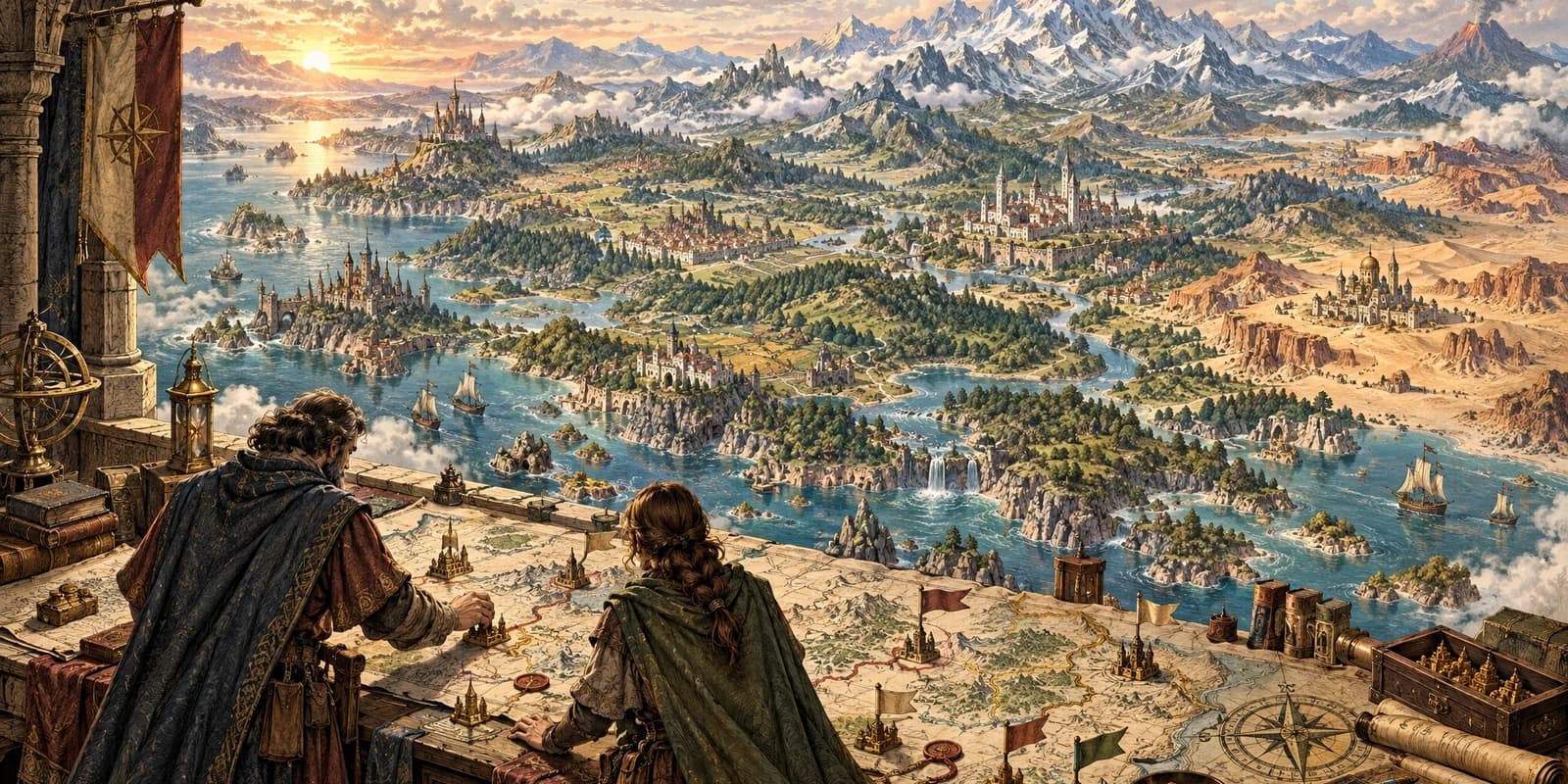
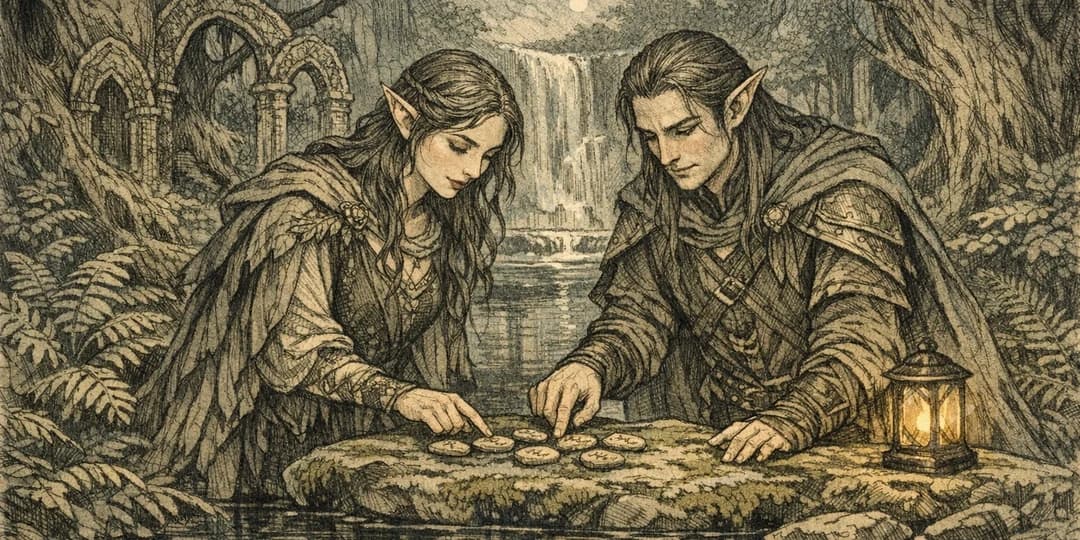
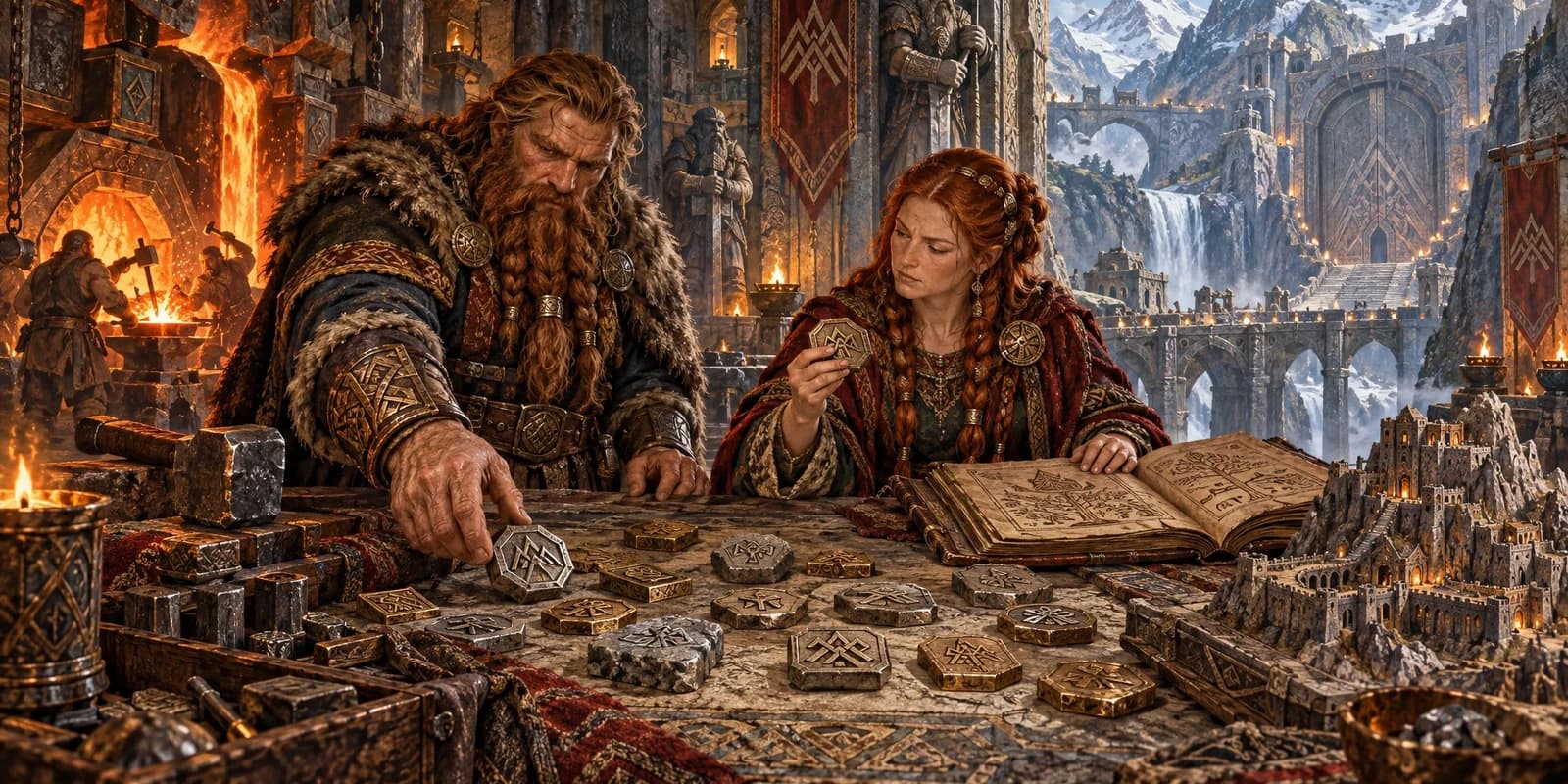
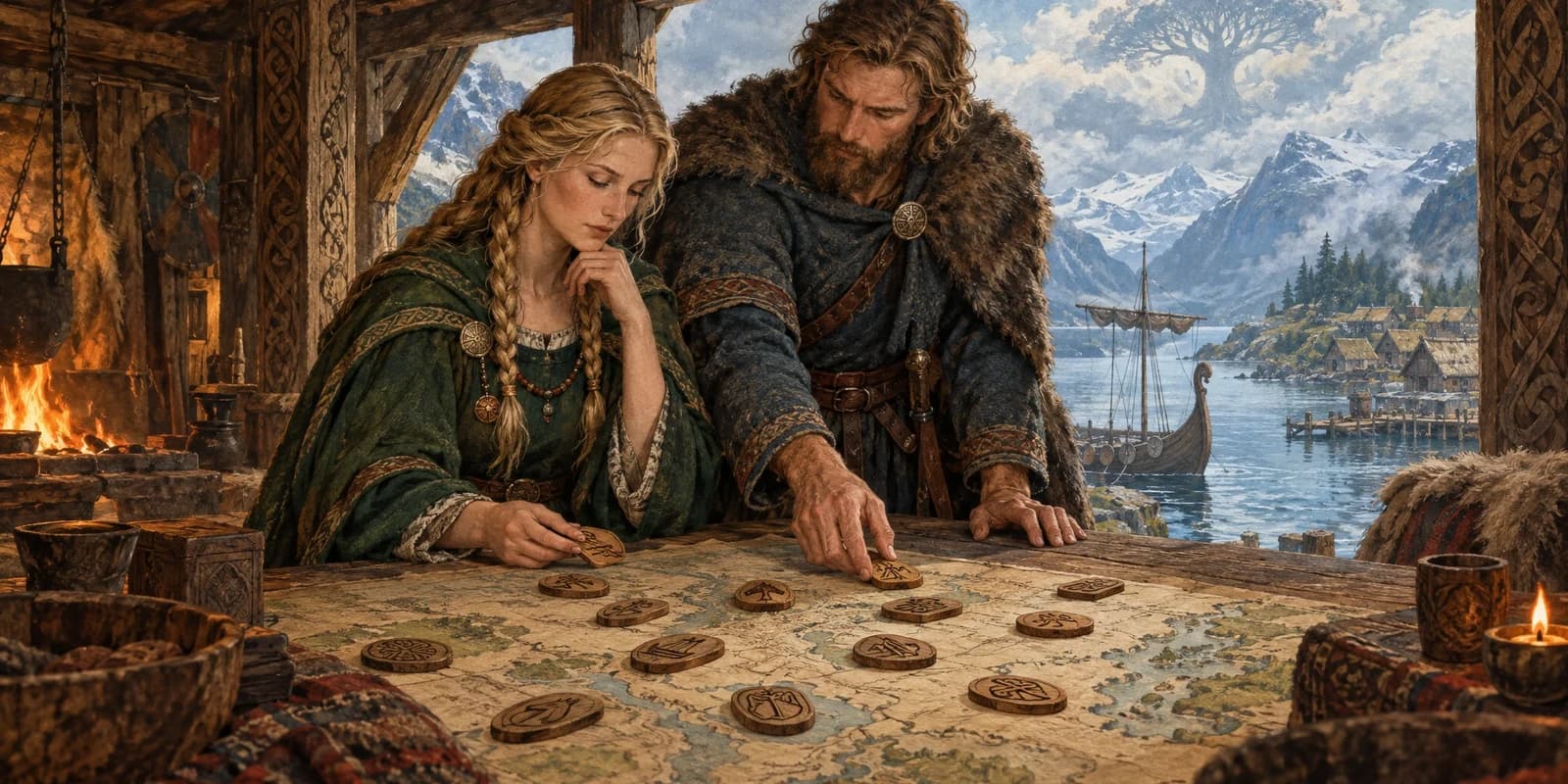
How to name a fantasy kingdom that sounds like it has a history.
A kingdom name generator is most useful when it understands that a sunlit elven realm, a grim desert empire, and a medieval riverland kingdom are different naming jobs. This tool turns your setting, culture, language flavor, and geography into an AI brief, then returns a structured list where every result includes a meaning note, a formal Kingdom-of style, an original royal house, and a capital-city idea.
How to use the Kingdom Name Generator
Four controls shape the shortlist most:
- Setting or mood — High fantasy, Medieval-inspired, Dark fantasy, Ancient-inspired, or Holy / sacred.
- Culture — Human, Elven, Dwarven, Nomadic tribes, Seafaring clans, or Dark / fallen.
- Language flavor — the phonetic texture: European, British-inspired, German-inspired, Ancient Greek-inspired, Chinese-inspired, Japanese-inspired, or East Asian-inspired.
- Geography — Desert, Coastal / island, Mountain, Forest, Plains / farmland, Arctic / tundra, or Riverlands.
Choose 10, 20, or 50 results and select Generate kingdom names. Open Options for the name form (single evocative word, compound, or formal style), a meaning theme such as Crown & rule or Stars & sky, a word to weave into the name, and opening letters. The optional Additional details box takes context like a founding legend or a neighboring rival, and the three preset chips — High fantasy realm, Dark fallen empire, and Celestial kingdom — fill it with editable starting points.
The page asks the AI service for exactly the selected number of structured results. If a heavily constrained brief cannot produce a complete, consistent list, the page shows an error instead of a partial one, and your choices stay in the form.
A fantasy kingdom name generator with meaning
Most fantasy kingdom generators return a bare name. Every result here carries a meaning or association note, which is what makes this a fantasy kingdom name generator with meaning rather than a syllable list. The optional Meaning or theme filter — Crown & rule, Honor, Light, Stars & sky, Shadows, Harvest, War — steers the brief so the root of the name quietly carries your theme. For a kingdom name generator astrology inspired brief, select Stars & sky and the results lean celestial: in a real test run, an elven starlit-forest brief produced Selrion, whose world hook describes a dynasty that marks each new comet from observatory-trees.
For a kingdom name generator D&D session, pair High fantasy with a culture and a geography, then read each result's world hook — a one-line note about the kingdom's dynasty, founding, or politics that can seed the next session's lore.
Elven, dwarven, human, and fallen kingdom cultures
The Culture control answers the searches that name a people: elven kingdom name generator and dwarvish kingdom name generator among them. Elven results sound melodic and ancient — long vowels, arboreal or starlit imagery. Dwarven results sound hewn and metallic, with hard consonants and deep-place weight. Human follows medieval monarchy patterns; Nomadic tribes sound open and wind-carried; Seafaring clans salt-worn; and Dark / fallen produces the ruined, severe sound that dark fantasy kingdom name generator searches are after, especially paired with the Dark fantasy setting.
Cultures are creative directions, never copies of any published setting's people — and the culture note in each result explains the fit so you can judge it yourself.
Medieval, Chinese, Japanese, German, and Greek-flavored kingdoms
Two controls cover the historical and regional searches. Setting = Medieval-inspired grounds the list in the tribal-territorial patterns of real medieval kingdoms — the medieval kingdom name generator search — while Ancient-inspired suits classical and bronze-age worlds.
Language flavor then tunes the sound: British-inspired and German-inspired follow medieval European textures; Ancient Greek-inspired favors classical endings like -os and -ia; Chinese-inspired and Japanese-inspired borrow the broad texture of those languages' historical realm names, for the chinese kingdom name generator and japanese kingdom name generator searches. In a real test run, a Medieval-inspired + Chinese-inspired brief with the word jade produced formal names like Kingdom of Yùhé (Jade River) — the requested word visible in both the sound and the gloss. One honest limit: a flavor is a sound direction, not a language, so have a fluent speaker review any name you rely on.
Desert kingdoms and other geography
Geography is the control behind the desert kingdom name generator search and its quieter siblings. A Desert brief evokes sand, sun, and oasis; Coastal / island brings tide and harbor; Mountain brings stone and passes; Forest brings green canopy; Plains / farmland brings harvest and horizon; Arctic / tundra brings frost; Riverlands brings fords and deltas. Geography shows up in the name itself and in the result's realm note, which explains how the name fits its land.
How real kingdom names work — and what this tool adds
Real kingdom names are mostly boring in the best way: they describe a people or a territory. The word kingdom itself comes from Old English cyningdōm — king plus -dōm, "jurisdiction," as the Online Etymology Dictionary records. Early English kingdoms were named the same plain way: Wessex was the land of the West Saxons, Mercia the border people, Northumbria the land north of the Humber — the Heptarchy is the classic framework for those Anglo-Saxon realms. Formal styles like the Kingdom of Norway pair a short name with a long form, and the ruling family gets its own name: the House of Tudor was the dynasty, England the kingdom.
This tool builds every result on those same patterns. The Realm record in each details dialog separates the pieces: the root element, the formal long-form name (Kingdom of X), an original royal house in the style of real dynasties — never a real one — and a matching capital-city idea. So one generated answer gives you four worldbuilding assets at once: the realm, its formal name, its ruling family, and its capital.
How to judge a generated kingdom name
Each card shows the name, pronunciation, setting, culture, name form, and language flavor. View details opens the realm record, the meaning and construction notes, flavor and realm fit, a world hook, related forms, verification advice, and four heuristic scores that compare results within your current request only.
Three quick checks before a name goes on the map:
- Sayability: can a reader say it on sight? Real kingdom names are short and pattern-built.
- Era fit: does it sound like your setting — grounded medieval or mythic high fantasy — rather than generically "fantasy"?
- Collision: search the exact name. Invented names occasionally resemble real kingdoms or published fiction, and the tool does not check.
More real results from test runs: Umbrwaste (Dark fantasy, Dark / fallen, Desert, theme Shadows) and the formal Principality of Zhōuyù (Jade Estuary) (Medieval-inspired, Chinese-inspired, Riverlands, word "jade"). Save candidates with the heart button — favorites stay in this browser's local storage — copy one name or the list, spin the name wheel, or use New ideas for a fresh batch from the same brief.
For the lands around your kingdom, the Country Name Generator handles republics and modern states, and the City Name Generator names the settlements inside it.
Where this tool differs from common alternatives
Fantasy Name Generators' kingdom page is the fast incumbent: one button, ten bare names, no controls or meanings. Scabard's kingdom generator offers structured inputs but requires registration. Mythopedia pairs its generator with a curated table of famous fictional kingdoms, meanings included — but the meanings belong to the published examples, not to generated names. Reedsy generates from free-text atmosphere fields.
Name Idea Box combines what these split apart: no signup, explicit controls for setting, culture, language flavor, and geography, and a structured result where every name arrives with its meaning note, formal style, original royal house, and capital idea — saved to a shortlist you can copy or compare. The honest tradeoff: AI output still needs your collision check.
What this tool can and cannot verify
This is an AI-assisted creative tool. It does not check whether a result matches a real historical kingdom or dynasty, a fictional realm from a published work, a trademark, or a game asset, and it never claims linguistic authenticity for a language flavor. Before publishing a novel, shipping a game, or printing a map, search the exact name and close variants, and review cultural associations — especially for flavors borrowed from real languages. For a broader take on fictional states, the Country Name Generator covers governments and scale beyond monarchies.
Common questions
Can I generate an elven or dwarven kingdom name?
Yes. Choose Elven or Dwarven under Culture. Elven results favor melodic, ancient sounds; dwarven results favor hewn, metallic ones. Both are original constructions, not names from any published setting.
Can I get a dark fantasy or desert kingdom name?
Yes. Choose Dark fantasy as the setting — optionally with the Dark / fallen culture — or Desert as the geography. In testing, the dark desert brief produced names like Umbrwaste and Shadegul.
Does it work for a Chinese- or Japanese-flavored kingdom?
Yes. Set Language flavor to Chinese-inspired or Japanese-inspired. The results borrow broad phonetic texture only — have a fluent speaker review names you rely on, since the tool makes no linguistic-authenticity claim.
Can I control the name's structure and theme?
Yes. Name form limits results to a single evocative word, a compound, or a formal style. Meaning or theme steers the root — Stars & sky for astrology-inspired realms, Crown & rule for regal ones — and Word to weave in anchors the name on a word you supply.
Why did my request fail instead of showing names?
The page requires a complete list at the exact requested size and filters out results that ignore your constraints, such as opening letters or a strict name form. A very tight brief can leave too few valid results. Retry once, then loosen the least important constraint.