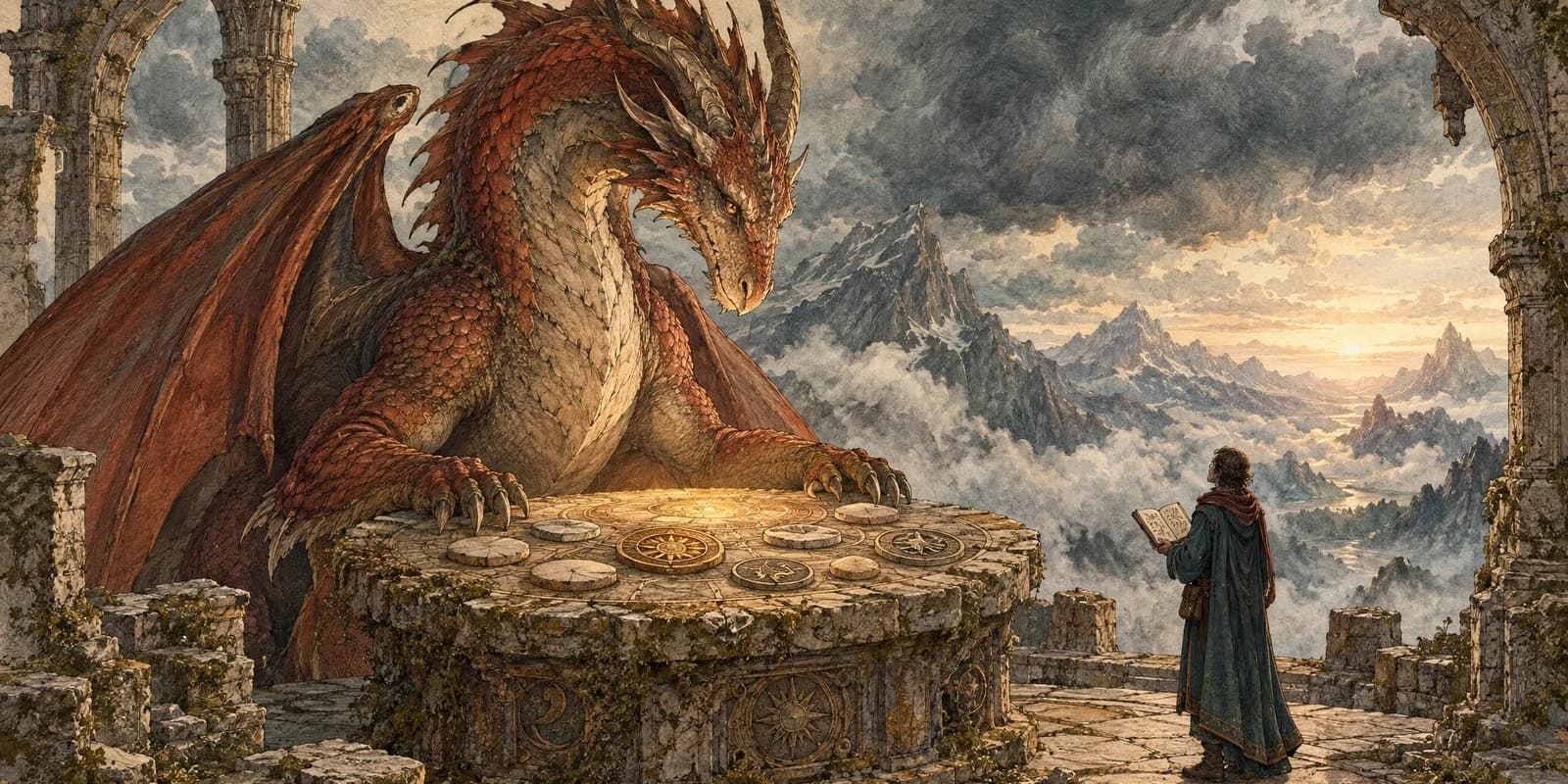
Build an elf name that belongs to your world.
An elf name generator should do more than combine decorative syllables. This one turns a character profile, name form, elf archetype, story-world direction, tone, sound, and meaning theme into a structured shortlist you can inspect, hear, save, copy, and test in a story or game.
How to use the Elf Name Generator
Start with the part of the identity you actually need. Choose First and last name for a complete character, Given name only for a personal name, Elf surname for a family line, or Clan name for a larger group. The result cards follow that structure, so you do not have to generate a full identity and manually remove unwanted parts.
Next, choose a Character profile, an Elf archetype, and a Story-world direction. These controls answer different questions:
- Character profile guides feminine, masculine, or gender-neutral presentation.
- Elf archetype describes the character's broad culture or environment, such as high elf, wood elf, dark elf, sea elf, winter elf, or workshop elf.
- Story-world direction sets the surrounding narrative atmosphere without copying an official fantasy setting.
- Tone controls the immediate emotional impression, such as elegant, ancient, fierce, mysterious, or playful.
- How many names? requests exactly 10, 20, or 30 structured results.
Select Options when sound or imagery matters. You can add one or more meaning themes, choose a sound texture and approximate length, request up to three opening letters, or list sounds to avoid. Additional details accepts a short natural-language brief for a role, homeland, family history, personality, object, or story problem. The preset chips provide useful starting briefs, and selecting one adds its text to that field for further editing.
The AI service must return the selected number of complete result objects. The server also checks the requested profile, name form, elf archetype, world direction, opening letters, required name parts, and duplicate display names. If the response is incomplete or contradicts those fixed choices, the page reports an error instead of quietly showing a partial list.
Choose high elf, wood elf, dark elf, or Christmas elf names
An archetype works best as a story constraint, not as a universal definition of what an elf must be.
| Archetype | Useful direction | A good supporting brief |
|---|---|---|
| High elf | Ceremonial, scholarly, diplomatic, or courtly | Add a rank, institution, duty, or old political conflict |
| Wood elf | Grounded, practical, mobile, or nature-bound | Add a terrain, craft, animal relationship, or local responsibility |
| Dark elf | Severe, secretive, subterranean, exiled, or politically tense | Describe the faction, moral conflict, or social role instead of requesting a famous setting |
| Sea elf | Coastal, tidal, navigational, mercantile, or exploratory | Mention an island, vessel, reef, port, or ocean duty |
| Winter elf | Austere, luminous, resilient, or seasonal | Add a climate, migration, winter ritual, or survival role |
| Workshop elf | Festive, industrious, playful, or craft-focused | Use Christmas workshop and describe a trade, invention, delivery problem, or comic flaw |
The high elf name generator and wood elf name generator needs are therefore handled directly by Elf archetype. A Christmas elf name generator request uses Christmas workshop elf plus the Christmas workshop world direction. These are original creative cues. They do not reproduce the species, cultures, languages, characters, or canon of a published book, film, game, or holiday brand.
Generate female elf names and different name forms
Choose Female when you want every returned identity to follow a feminine character presentation. Choose Male or Gender-neutral for those directions, or leave the profile on Any to let the shortlist vary. This label describes the fictional presentation requested for the result; it is not a rule about how names must be gendered in every invented culture.
Name form has a larger practical effect than profile. A complete character may need a given name, family or clan element, and optional epithet. A settlement record may need surnames only. A royal house, forest community, or military order may need clan names that can be reused across several characters. Select the form before tightening sound and theme so the generator has enough room to build a coherent structure.
For example, a useful brief might combine Female, Full name, Wood elf, Tabletop heroic fantasy, Nature-bound, and the Forest and Courage themes, then add: “A ranger who protects an ancient river crossing.” This is a brief pattern, not a guaranteed or historically verified naming formula.
In a local verification run with that brief, a 10-name request returned Sylraven Briarford as its first result. The structured response identified Sylraven as the given name and Briarford as the surname or clan element, associated it cautiously with forest courage and a protected river crossing, and described a ranger-guardian story role. That observed result confirms the response format for one request; it does not establish an etymology, guarantee future output, or prove that the name has no existing use.
Use the elf name generator with meanings carefully
The Meaning or image control lets you request Moonlight, Forest, Stars, Wisdom, Courage, Song, Winter, or Craft. Each result then includes a Meaning theme and a longer Thematic meaning note in its details dialog.
These fields explain the creative association used to shape the result. They are not dictionary translations, historical etymologies, or proof that an invented syllable belongs to a real or fictional language. The generator is specifically instructed not to fabricate those claims. If a name will appear in published work, check its spelling and associations independently and ask a knowledgeable speaker when it resembles a real language or culture.
Use the meaning note to compare narrative function. A Forest association could suggest shelter, roots, patience, hunting, decay, or renewal. If the first list interprets the theme too literally, keep the theme but explain the desired angle in Additional details. That usually gives the model a more useful constraint than repeatedly requesting a new list without changing the brief.
D&D, 5e, Pathfinder, and BG3-style elf name briefs
People searching for an elf name generator for D&D, 5e, Pathfinder, or BG3 usually need a name that is readable at the table, memorable to other players, and compatible with heroic fantasy. Choose Tabletop heroic fantasy, then use Additional details for the character's class-like role, background, temperament, homeland, or party function.
This direction is deliberately system-neutral. It does not consult Dungeons & Dragons, Pathfinder, Baldur's Gate, or another game's official languages, ancestry rules, lore, sourcebooks, or character database. It also does not determine whether a name already exists in a campaign or published work. The practical advantage is that you can express the character function you need while keeping the output original-world and easy to adapt.
For a table-ready shortlist, favor Balanced, Compact and strong, or Soft and lyrical sound textures, then use the Readability estimate and pronunciation note as comparison aids. Say the finalists aloud with titles, place names, and party introductions. The score is an AI estimate for the submitted brief, not an official game statistic or proof of originality.
Tolkien, LOTR, Dragon Age, WoW, Skyrim, and Warhammer searches
This page does not generate official Tolkien elf names, Quenya or Sindarin translations, lore-compatible Lord of the Rings identities, or canonical names for Dragon Age, World of Warcraft, Skyrim, or Warhammer. Those requests involve distinct copyrighted worlds and, in Tolkien's case, constructed languages with their own documented systems.
The form instead offers broad original-world directions that address the atmosphere behind those searches:
- Mythic literary fantasy supports an ancient, dignified, nature-aware brief without imitating Tolkien names or languages.
- Dark epic fantasy supports severe politics, war, exile, or tragic grandeur without copying Dragon Age or Warhammer material.
- Nordic fantasy supports cold landscapes, hard consonants, sagas, and frontier roles without using Skyrim or Elder Scrolls lore.
- Arcane adventure fantasy supports vivid magical societies and adventurous characters without reproducing Warcraft names or factions.
Describe the qualities you want rather than entering a franchise character as a template. “A proud archivist from a fading city who distrusts prophecy” gives the generator original narrative material. “Make a name like [famous character]” narrows the request toward imitation and is intentionally discouraged by the prompt.
Read the result cards and identity details
Each card shows the name, pronunciation, profile, name form, elf archetype, tone, and a short description. The actions under a result let you:
- copy one name;
- hear it through the browser's speech synthesis;
- save it to browser-local favorites;
- open View details for the full explanation.
The details dialog separates the identity into given name, surname or clan, and epithet when those parts apply. It also includes the thematic meaning, construction note, suggested story role, sound and rhythm note, world-fit explanation, related forms, and a verification reminder.
Four score bars compare Brief fit, Atmosphere, Readability, and Story potential within the generated shortlist. They help you notice tradeoffs. A highly atmospheric name may be harder to say, while a readable name may feel less unusual. These numbers are heuristic AI estimates, not measurements of linguistic authenticity, uniqueness, popularity, legal availability, or canon compatibility.
Use the heart button to build a shortlist, switch to Favorites to review saved identities, and open the Elf name wheel when you want a playful way to choose among visible results. Favorites are stored in the current browser; they do not sync to an account or another device.
Where this tool differs from quick random lists
Fast random-list tools are useful when you want immediate volume with almost no setup. Dedicated alternatives such as Fantasy Name Generators, Reedsy's Elf Name Generator, and The Story Shack's Elf Name Generator provide other approaches to elf-name discovery.
Name Idea Box is designed around a smaller, inspectable brief. Its practical difference is the combination of explicit name form, archetype, broad world direction, sound controls, meaning themes, story details, validated structured output, per-name explanations, browser-local favorites, and a spin wheel. This makes it useful when a writer or roleplayer wants to understand why a name might fit rather than scan an unexplained list.
The tradeoff is that generation takes longer and AI output still requires judgment. This page has no authoritative fantasy-language database, official franchise integration, live plagiarism or character-collision search, trademark clearance, account sync, or guarantee that a result is new. For a dark immortal character rather than an elf, use the Vampire Name Generator. For surname-specific real-world and fictional directions, use the Last Name Generator. For broad high-volume exploration, use 1000 Random Names.
Fix a weak or repetitive shortlist
If the names are too ornate, switch Sound texture to Balanced or Compact and strong, choose Short or Medium length, and list apostrophes or a difficult consonant in Sounds to avoid. If the names feel generic, add one concrete social role, setting detail, relationship, or object rather than stacking more mood adjectives.
If several controls conflict, remove the least important one. A three-letter prefix, short length, multiple themes, several tones, a rigid sound texture, and a detailed full name may leave little room for ten genuinely distinct identities. Keep the constraint that matters to the character and relax the rest.
Before publishing or using a result commercially:
- Search the complete name and its distinctive parts for major character, author, product, and organization collisions.
- Check whether the sound accidentally resembles a real cultural or linguistic term.
- Read the name in dialogue and narration, not only as a card heading.
- Test likely nicknames, spelling mistakes, and pronunciation variants.
- Confirm that related characters, places, and factions follow a coherent naming logic.
Common questions
Does this generator create official fantasy-language names?
No. It creates original English-described fantasy identities. Meaning notes are thematic associations, not translations into Quenya, Sindarin, D&D languages, or another fictional language.
Why did the page show an error instead of fewer names?
The response must contain exactly the selected quantity and all required fields. Fixed choices such as name form, archetype, world direction, and opening letters are validated on the server. Retry the request or remove a conflicting constraint.
Can I use a generated name in a book or game?
The result is a creative starting point, not legal clearance or proof of originality. Search for collisions, check cultural associations, and obtain appropriate professional advice when publication or commercial risk matters.
Are saved elf names permanent?
They remain in local browser storage on the current device until that site data is cleared. There is no account or cross-device synchronization.